7 Must-Knows If You’re Considering SPS EDI

Whether you're beginning your EDI compliance journey or are currently managing complex EDI integrations across trading partners, navigating the world of EDI can be a major challenge, especially when you're under pressure to get an EDI solution in place. It's easy to feel overwhelmed and rush into a decision, often choosing the first provider you come across.
However, a hasty choice can lead to big problems down the line, constraining your B2B operations and hindering your ability to scale and meet new requirements.
When researching any cloud EDI solution, vendors are quick to highlight their benefits, positive case studies, and success stories. But if you're a strategic business, you know that understanding a solution's weaknesses is just as (if not more) important. The real key is identifying the risks that could harm your business, now or later.
This article is designed to help you do just that. We've gathered insights from companies that have firsthand experience with using SPS's EDI services—including those who ultimately made the switch to Cleo. We'll explore seven key factors to consider before you commit to an EDI provider, offering a clear, experience-backed look at the real-world implications of your decision. Our goal is that you have the knowledge to choose an EDI partner that not only meets your needs today but also supports your long-term EDI integration strategy.
What You Need to Know Before Choosing SPS for EDI
In the search for EDI providers, it is more than likely you've come across SPS EDI.
If you're unfamiliar, SPS positions itself as a full-service, cloud-based network that simplifies the retail supply chain by managing the technical complexities of data exchanges, primarily Electronic Data Interchange (EDI), which allows customers to focus on their core business. The company presents itself as the "world's retail network," offering a comprehensive suite of managed services. Many companies turn to SPS Commerce to offload the technical and operational aspects of EDI, especially when organizations are too small to have their own dedicated teams and resources for EDI.
Essentially, these SMBs are not just looking for EDI software, but for a true managed services provider and partner to handle their EDI needs.
But what is the real customer experience like with SPS Commerce?
We've collected insights from across the web, as well as current Cleo customers who can attest to similar experiences. These findings are meant to be informative, as they are drawn from real stories, gathered through customer interviews and competitive evaluations. The goal? To equip you with the most accurate, experience-backed information so you can choose the best EDI provider for your business.
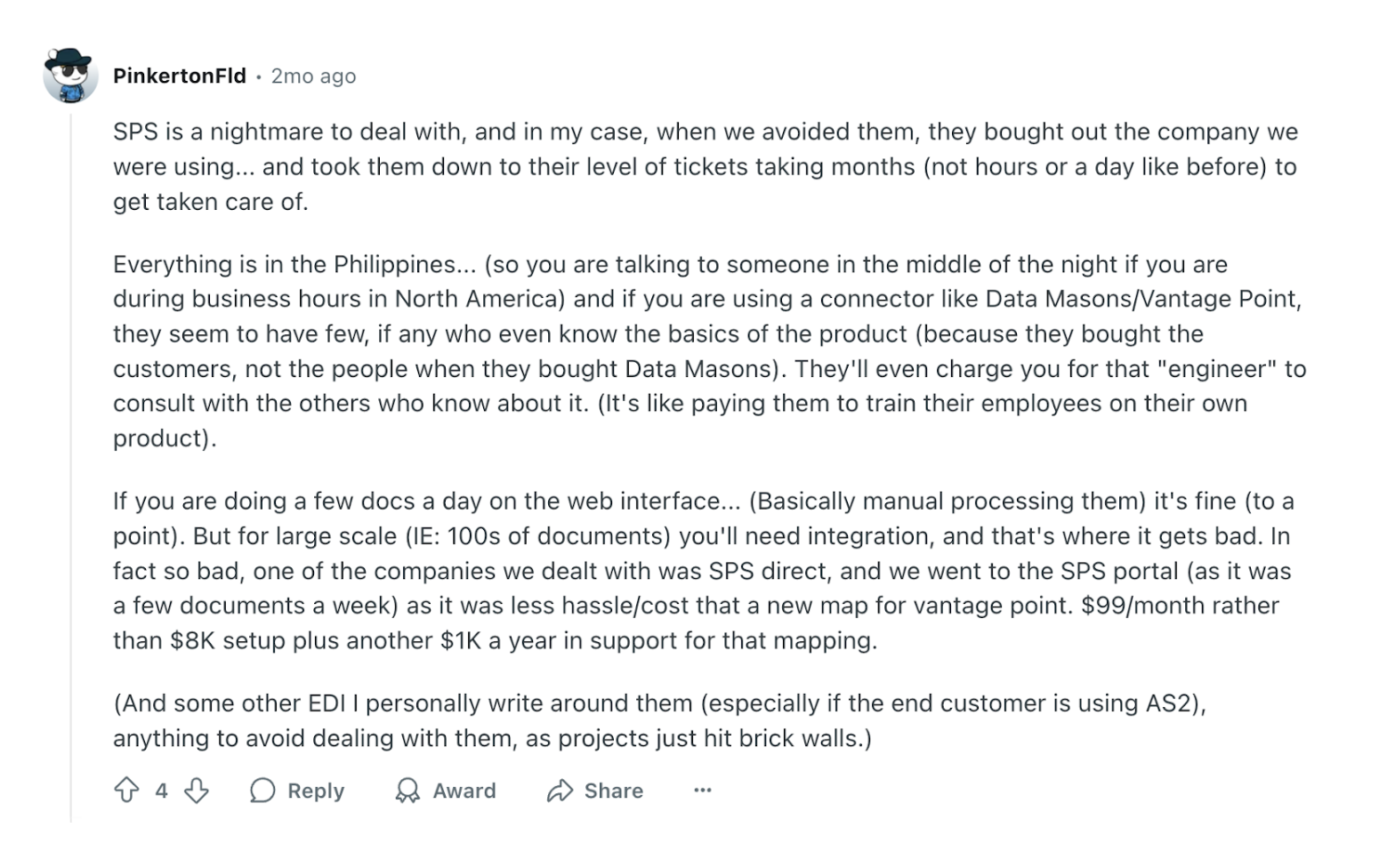
Based on real customer feedback, several recurring challenges with SPS EDI have surfaced that may be worth considering before you commit.
1) Support Delays Disrupt Business Operations
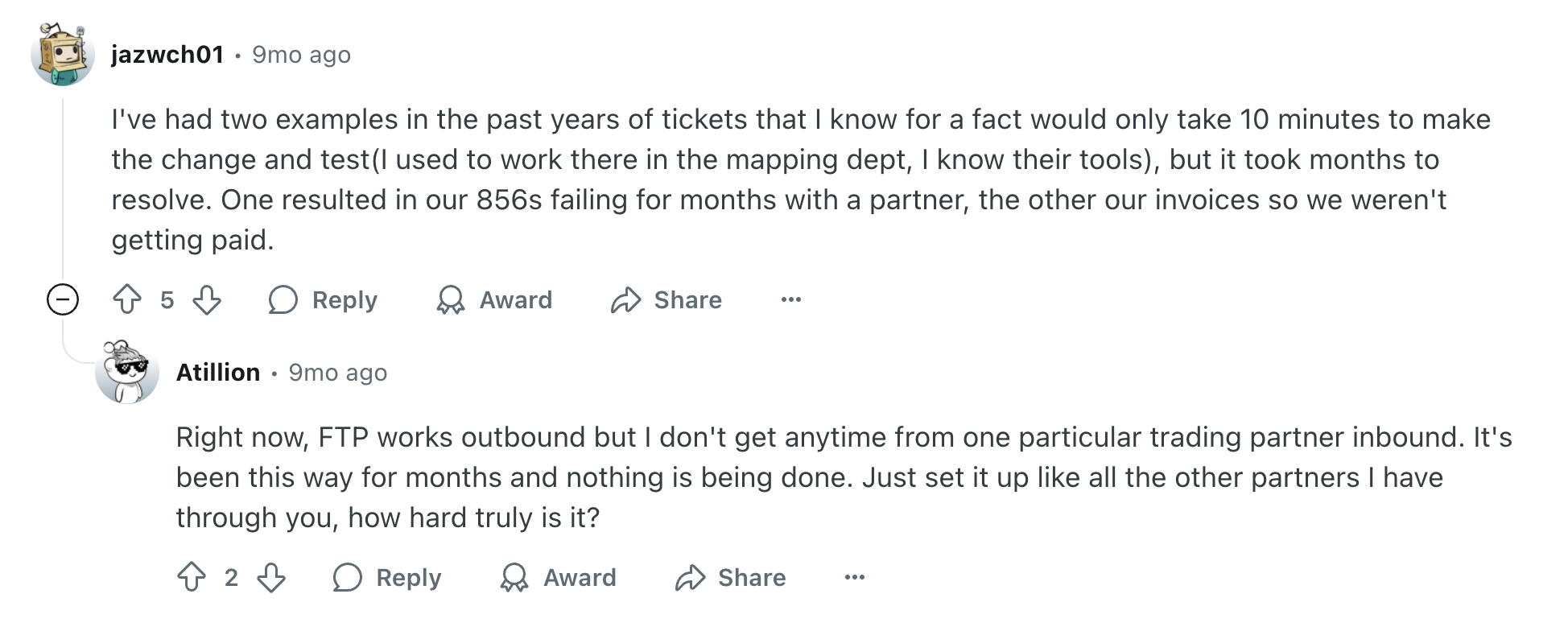
SPS EDI relies heavily on a ticket-based support system, which can significantly slow resolution times — especially when you’re dealing with urgent, time-sensitive issues. For businesses that depend on EDI to keep orders moving, waiting days for a response isn’t an option. These delays can trigger supply chain disruptions, missed shipments, lost revenue, and strained customer relationships.
Duraflame Switched From SPS to Cleo. Now Support’s Never in Question.
John Hwee, Director of IT at Duraflame Inc. (a former SPS customer) explains that Cleo is "...secure, easy to use, and highly flexible to meet our business requirements ... We experienced zero problems or issues even though we implemented CIC during our peak business time..."
2) Overloaded and Overstretched Technical Teams
While SPS EDI has technical expertise, its internal teams are often stretched thin across multiple projects. This lack of bandwidth can slow response times and limit the level of support you receive — especially when fast answers and proactive engagement are critical. For many businesses, this becomes a serious roadblock to smooth day-to-day operations.
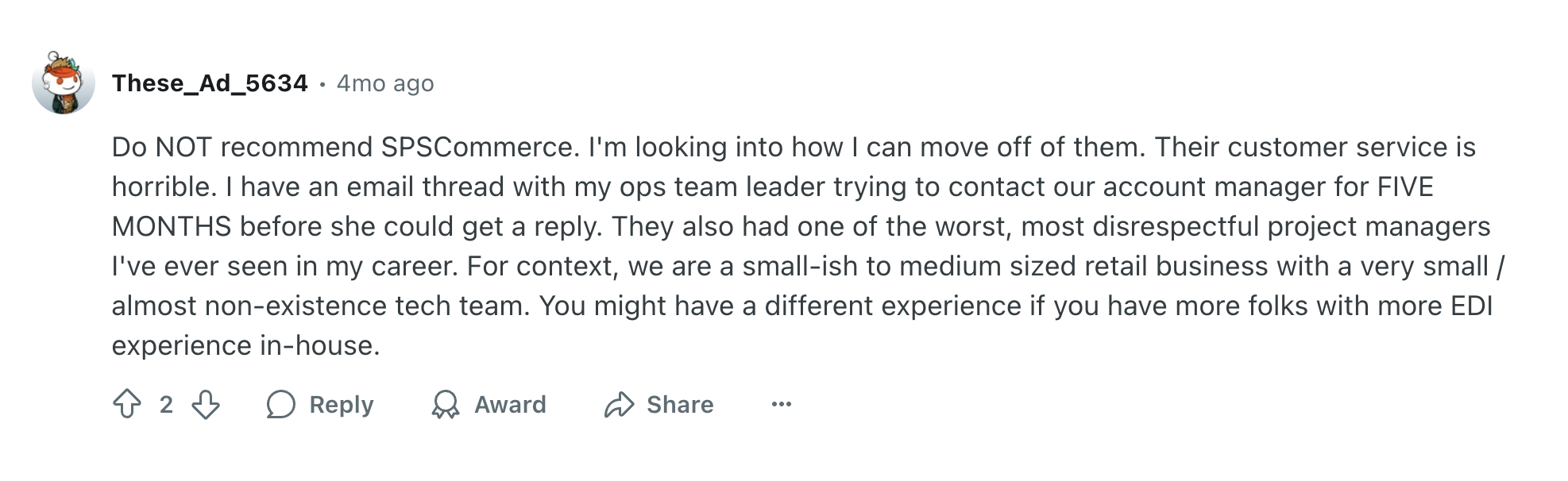
3) Lack of Direct Access to EDI Experts
Complex EDI issues require real technical expertise, not just general customer service. The SPS EDI support model often routes issues through customer success managers, who may not have the deep technical skills needed to diagnose and resolve the actual root cause. Without direct access to engineers, problems can go unresolved or misdiagnosed, putting your business continuity at risk.
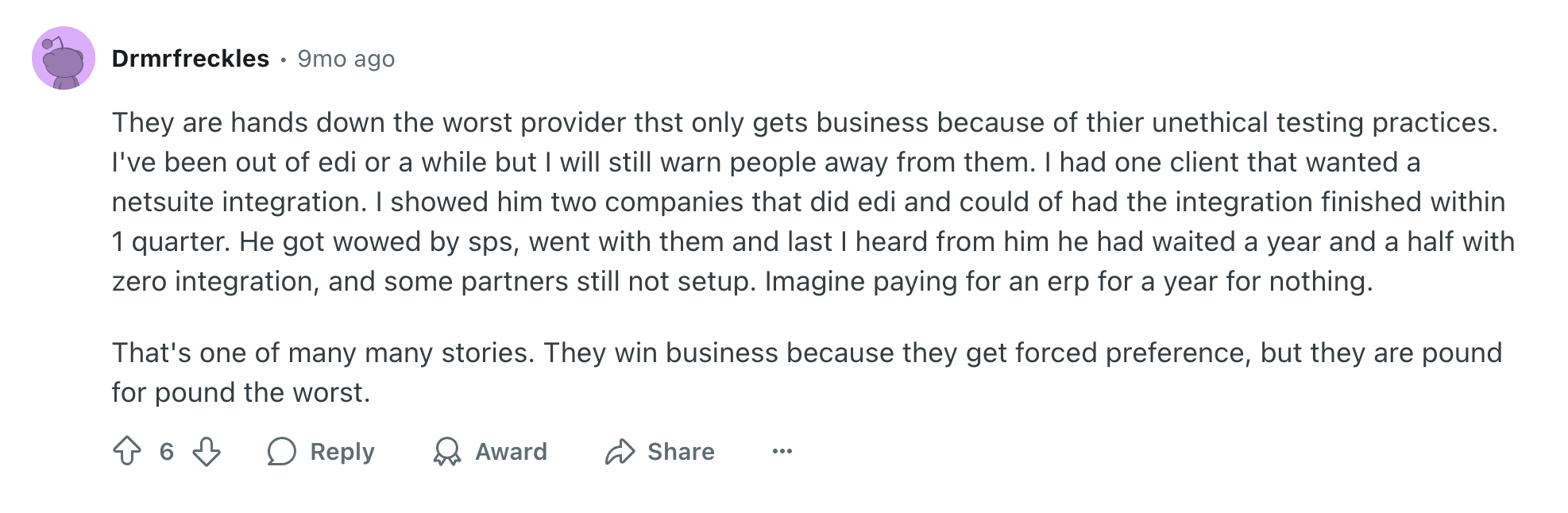
4) Pricing That Increases With Growth
At first glance, the SPS EDI pricing model may seem affordable, but as your business grows, costs can also climb quickly. Transaction volume, new trading partners, and add-on services all contribute to rising costs. Without a clear understanding of the long-term pricing structure, these unexpected financial costs can eat into your margins and create unanticipated fees.
5) Lengthy Implementation and Onboarding Timelines
Getting new trading partners live through SPS EDI can be a slow, drawn-out process. Onboarding delays of several months have been reported, particularly for businesses with complex or high-volume workflows. These extended timelines limit your ability to adapt quickly to market demands and delay the return on your EDI investment.
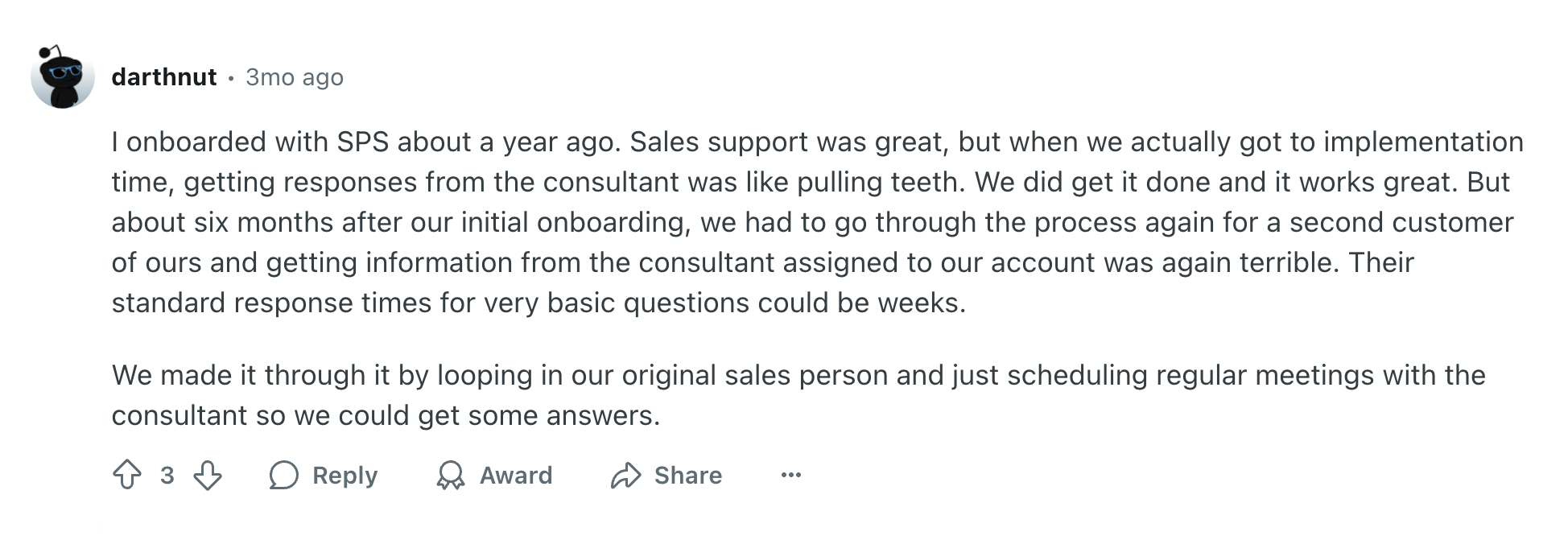
6) Managed in Name, Not in Practice
SPS EDI is positioned as a fully managed service, but many customers report that the reality falls short. Instead of hands-off support, businesses often find themselves chasing down issues and support tickets they expected SPS to manage.
Lunchskins left SPS. Here’s what happened.
"Our previous EDI provider, SPS Commerce, presented multiple inefficiencies, and we needed a solution that truly understood our business and could support our operations effectively." —Shannon Peters, CFO/COO of Lunchskins
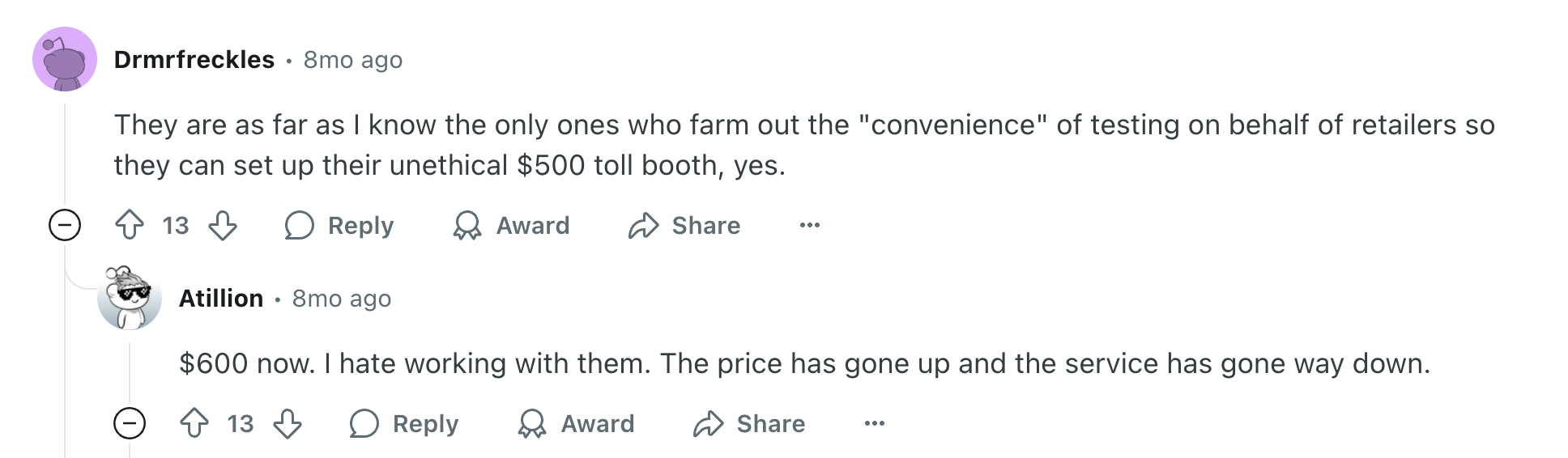
7) Testing Gaps That Leave Systems Vulnerable
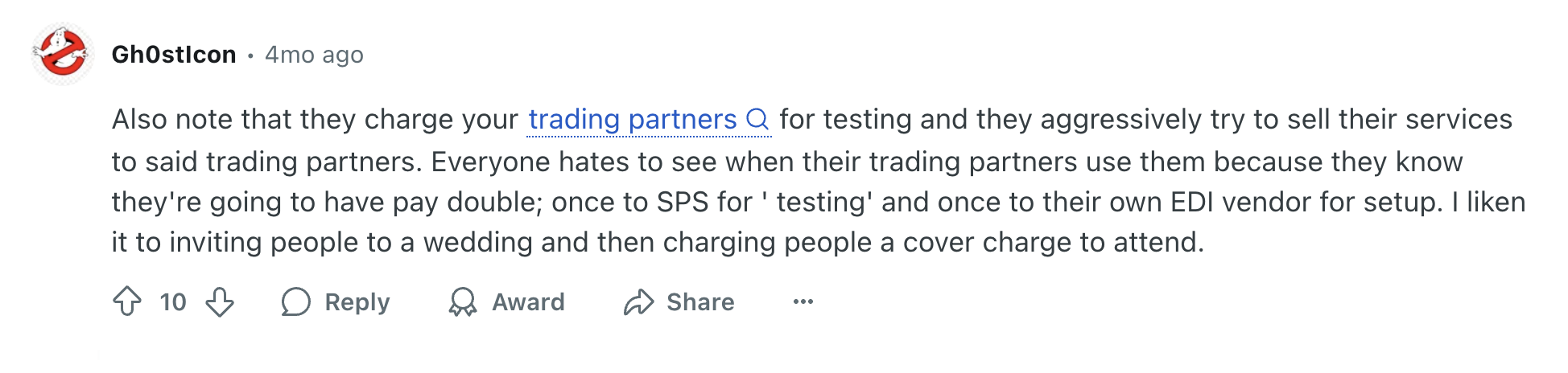
A reliable EDI deployment depends on more than just platform-level testing — it requires full validation across your internal systems and trading partners. But with SPS EDI, testing often stops at their software boundary, leaving your ERP, TMS, and other backend systems unvalidated. That gap can lead to post-launch issues, chargebacks, and costly downtime.
How Does SPS EDI Compare to Cleo EDI?
Fortunately, Cleo can not only speak to the issues but have actually made it a point to solve them. If you are currently or potentially affected by these short-comings, you'll be pleased to hear Cleo is the ultimate alternative, beginning with a faster, better support experience.
Faster Support
The Cleo support model offers live phone access to real experts and 24/7 system monitoring. Our proactive approach means most issues are resolved before they reach your team or disrupt your supply chain operations, helping you maintain uptime and keep business running smoothly.
When it comes to technical teams, our dedicated EDI experts aren’t juggling an overwhelming number of accounts. We staff and allocate resources strategically to ensure consistent availability and responsiveness. That means faster support, more hands-on guidance, and fewer delays when you need help the most.
Access to EDI Experts
Boasting a 1-hour support response guarantee, Cleo ensures you have direct access to experienced EDI technical engineers and specialists from the start, not just customer service representatives. When a complex issue arises, you're connected with professionals who possess the right technical knowledge to diagnose, troubleshoot, and resolve root-cause EDI failures efficiently, safeguarding your business continuity and reducing resolution times.
Predictable Pricing
The Cleo approach to pricing is meant to be transparent, predictable, and built to scale with your business, not against it. With no hidden fees or surprise charges, you can confidently forecast EDI costs and protect profitability as you grow.
Faster Implementation and Onboarding Timelines
Cleo’s implementation approach is built for speed, significantly reducing onboarding timelines for new trading partners. Our streamlined processes, pre-built customizable integrations, and dedicated implementation teams ensure a faster go-live, allowing you to quickly adapt to market demands and achieve a quick return on your EDI investment.
Better Management
At Cleo, we pride ourselves on our managed services experience.
We make sure the term "EDI managed service provider" means what it should, end-to-end 24/7 support that handles EDI integration for your business. From onboarding and mapping, to map changes and error resolution, our experts are always prepared to help.
No Testing Gaps
Cleo's implementation process includes rigorous, end-to-end testing that extends beyond our platform. We ensure seamless integration and thorough validation with your internal ERP, TMS, and other backend systems, as well as with your trading partners. This comprehensive testing approach leads to seamless integrations, fewer surprises after go-live, and a more stable, resilient EDI environment from day one.
Strategic Considerations
Choosing the right EDI provider starts with aligning the solution to your internal capabilities and long-term goals. Do you have a team with the time and expertise to manage EDI projects, system configurations, and support? Or are you looking to fully offload that responsibility to a trusted partner?
If you have the in-house resources to handle day-to-day EDI tasks and simply need a platform with basic support, SPS EDI may be a good fit. But if you're seeking a truly managed service that reduces internal burden, offers real-time expert support, and ensures full visibility and control, Cleo may be the option you’re looking for.
Evaluate your infrastructure, your team, and your growth goals. Then choose a partner that can support not just where you are today, but where you’re headed.
If you have questions about data integration or how Cleo's products and services can help your business, contact us at sales@cleo.com, +1.815.282.7695, or reach out here. Also, explore some of our educational resources through our content hub.