The Future of Cloud Integration Services: A 2026 Strategy Guide
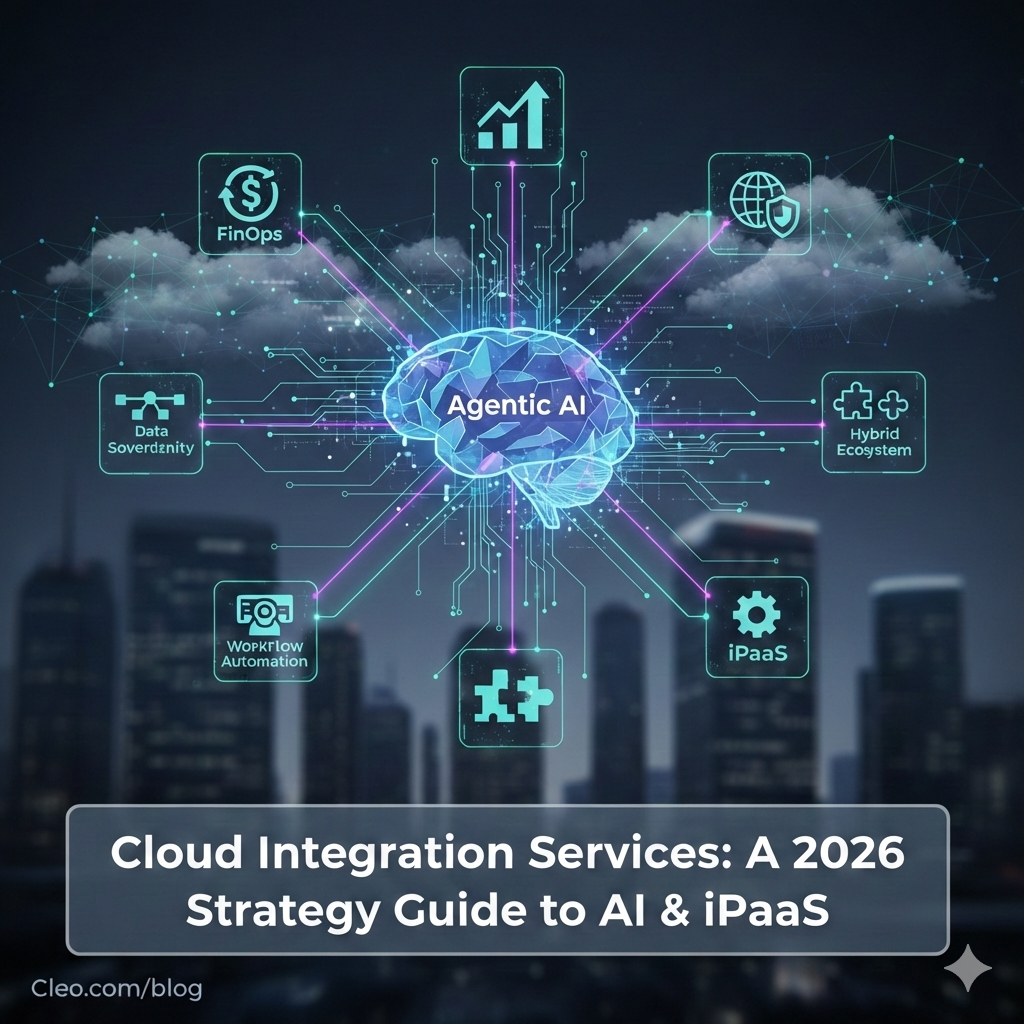
In the fast-moving landscape of 2026, the debate over "cloud vs. on-premise" is a relic of the past. Today’s enterprise isn’t just moving to the cloud; it’s orchestrating a complex, multi-layered ecosystem of cloud integration services. With the average mid-market business now managing over 400 SaaS applications and a growing fleet of AI agents, the "pipes" that connect them have become the most critical infrastructure in the stack.
If you’re looking to scale, optimize your cloud integration platform, or simply move past the "spaghetti code" of the early 2020s, this guide explores how the best cloud integration services are evolving to meet the demands of an AI-first world.
What are Cloud Integration Services in 2026?
Modern cloud integration services are a suite of technologies and managed solutions that connect disparate cloud environments (SaaS, PaaS, IaaS) and legacy on-premise systems. In 2026, these services have shifted from passive data movers to active, autonomous orchestration layers.
Instead of just syncing data from an ERP to a CRM, today’s cloud integration platform acts as the central nervous system of your business—governing data flow, enforcing security protocols like NIS2, and leveraging Agentic AI to fix broken workflows before they impact your bottom line.
The Shift from Migration to Value Realization
By early 2026, the global cloud market surpassed $1 trillion. The focus for most CTOs has shifted from "How do we get there?" to "How do we derive value?" This is where specialized cloud integration services provide the edge, ensuring that data doesn't just sit in silos but flows into real-time analytics engines and AI models.
3 Key Pillars of 2026 Cloud Integration
To rank and compete this year, your integration strategy must address three modern pillars: Agentic AI, FinOps, and Data Sovereignty.
1. Agentic AI & Autonomous Orchestration
Static, rules-based integrations are no longer enough. The top cloud integration services now feature "Agentic AI"—autonomous systems that can:
- Self-Heal: Automatically detect API schema changes and adjust mappings without human intervention.
- Predictive Onboarding: Use natural language processing (NLP) to onboard new trading partners in minutes by "reading" their technical requirements.
- Intelligent Routing: Dynamically move data based on latency, cost, or compliance needs.
2. FinOps-Aligned Integration
Cloud bills are a boardroom priority in 2026. Integration services now include built-in FinOps tools to monitor the cost of data egress and the compute intensity of AI-driven workflows. A smart cloud integration platform helps you balance innovation with budget control by optimizing how and when data moves across multi-cloud environments.
3. Data Sovereignty (NIS2 & DORA)
With the full enforcement of the NIS2 Directive and DORA, compliance is no longer a "nice to have." Modern integration services provide "regional runtimes," allowing you to process sensitive data within specific jurisdictions while maintaining a global view of your operations.
ESB vs. iPaaS: Why Legacy Modernization Can’t Wait
Many enterprises are still tethered to legacy Enterprise Service Buses (ESB). While ESBs were great for the on-premise era, they lack the elasticity required for 2026.
Feature | Legacy ESB | Modern Cloud Integration (iPaaS) |
Deployment | On-premise / Hardware-heavy | Cloud-native / Serverless |
Scalability | Manual / Static | Elastic / Auto-scaling |
Connectivity | Point-to-point / Hard-coded | API-first / Pre-built connectors |
AI Capabilities | None | Agentic AI & ML-driven mapping |
Cost Model | Capital Expense (CapEx) | Variable/Consumption-based (OpEx) |
Why Cleo Integration Cloud (CIC) is the 2026 Standard
When evaluating cloud integration services, the goal is "frictionless business." Cleo Integration Cloud (CIC) has emerged as a leader by blending the reliability of B2B/EDI with the agility of modern API integration.
- Cleo AI: Our platform leverages intelligence across the Cleo Network to provide predictive insights, helping you resolve supply chain errors before they become SLA violations.
- No-Code Onboarding: We’ve empowered "citizen integrators" to build complex workflows using simple prompts, clearing the IT backlog.
- Blended Support: Whether you want a fully managed service or a self-service platform, Cleo provides the flexibility to scale as your business grows.
"In 2026, your integration platform shouldn't just be a tool; it should be a strategic asset that anticipates your next move."
2026 Integration Readiness Checklist
Before signing with a new cloud integration service, ensure they can check these boxes:
- [ ] Does the platform support Agentic AI for autonomous error resolution?
- [ ] Is it compliant with NIS2, DORA, and GDPR data sovereignty requirements?
- [ ] Does it offer a unified console for both API and EDI workflows?
- [ ] Are there pre-built connectors for your industry-specific ERPs (SAP S/4HANA, NetSuite, etc.)?
- [ ] Does it provide real-time visibility into the financial cost of integrations (FinOps)?
Ready to Modernize Your Ecosystem?
Don't let legacy integration hold your 2026 growth hostage. Whether you're looking to automate your supply chain or unify your SaaS sprawl, the right cloud integration services can turn your data into a competitive advantage.

Book a live demo


