EDI 888: Item Maintenance
Read the guide below to learn about the EDI 888.
If you need to send or receive EDI 888s, contact our team of EDI experts today.


What is an EDI 888?
EDI 888, also known as an Item Maintenance transaction, is used by suppliers, manufacturers, or distributors to communicate updates or changes to item information. This includes pricing, product descriptions, packaging, unit of measure, and item status changes. Retailers use it to maintain accurate product data across systems.
What are the Essential Components of EDI 888?
EDI 888 documents contain comprehensive item information. Key fields may include:
- Product identifiers (SKUs, UPCs, GTINs)
- Item descriptions and classification codes
- Pricing details and discount structures
- Packaging, shipping, and handling specifications
- Effective dates for changes
- Item lifecycle status (new, discontinued, revised)
How do I Use EDI 888?
Suppliers send EDI 888 to their retail or distribution partners when product information changes or new items are introduced. The data can be ingested directly into a recipient’s product information management (PIM) or ERP system, eliminating the need for spreadsheets or manual entry.
Retailers can also use EDI 888 to synchronize vendor catalogs with their internal systems to ensure accuracy in listings, invoices, and shelf pricing.

What are the Benefits of EDI 888?
Using EDI 888 ensures that everyone in the supply chain is working from the same, up-to-date product data. This leads to fewer pricing disputes, improved time-to-market for new products, and better visibility for inventory planning.
With automated item maintenance, your trading partners no longer have to manually update SKU data—saving time and reducing the chance of human error across catalogs and systems. Furthermore, what will you gain from leveraging Cleo's expertise and services for your EDI?
With Cleo's EDI solutions
vs
Without Cleo's EDI solutions
Notifications: Receive real-time alerts for inbound orders
Missed or delayed orders due to lack of real-time alerts
Intuitive Webforms: Auto-fill response docs to eliminate manual data entry
Time-consuming manual data entry that introduces frequent errors
Smart Folders: Organize documents dynamically based on custom rules
Disorganized document storage and difficult retrieval during audits or fulfillment
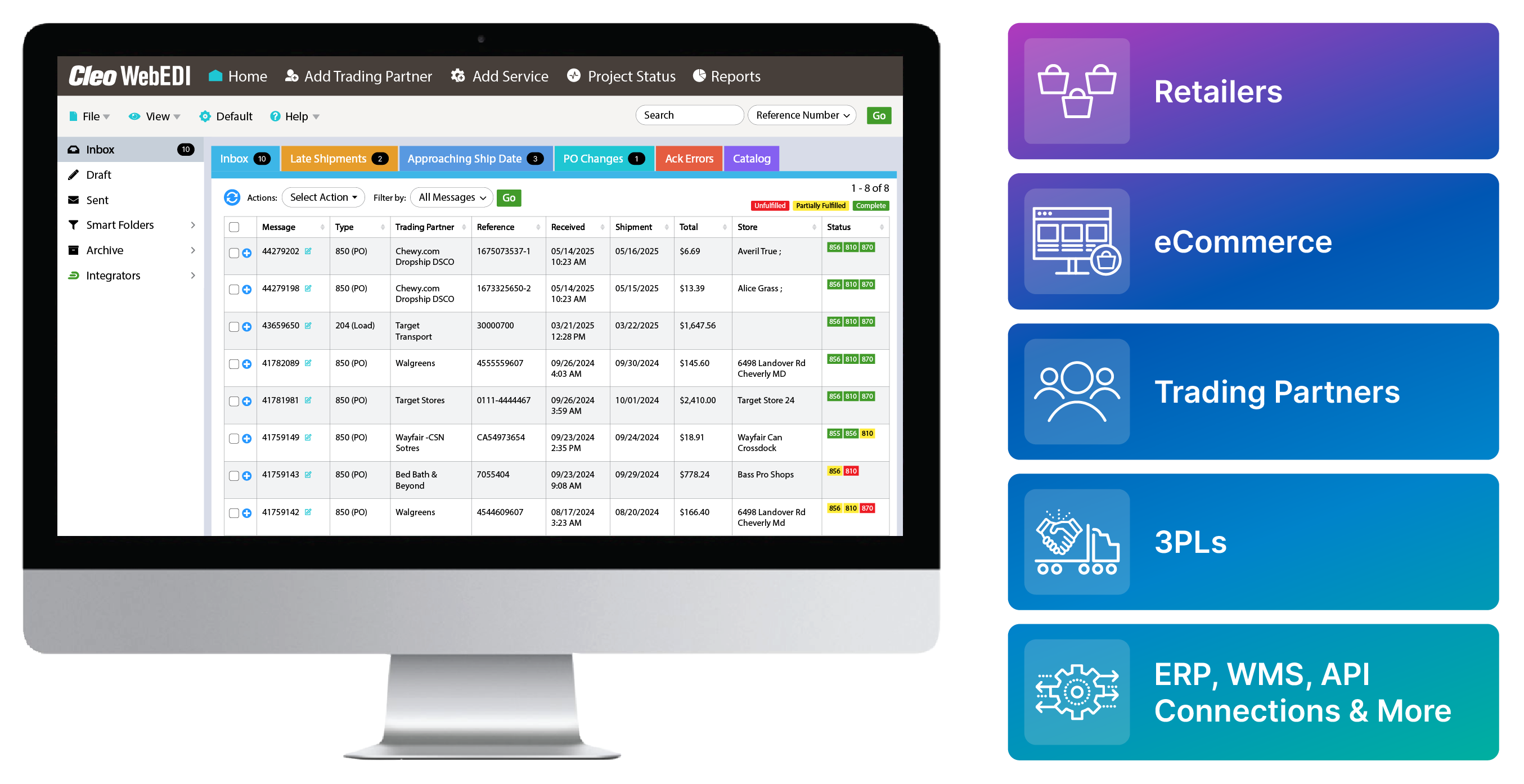
Document Fulfillment Dashboard: Monitor order statuses live—unfulfilled, partial, or complete
Limited visibility into which orders are unfulfilled, partially shipped, or completed
Label & Document Printing: Instantly generate shipping labels and compliance docs
Manual label generation that slows down shipping and risks compliance violations
Catalog Management System: Pair with Auto-Pack ASN for rapid order response
Delays in ASN creation due to disconnected catalog systems
Batch Processing: Process and print multiple documents and labels at once
Inefficiency when processing documents or labels one-by-one in high-volume scenarios
Scalable Portal: Seamlessly integrate with any ERP, WMS, or accounting system
Disjointed systems requiring duplicate data entry across ERP, WMS, or accounting platforms
Keep a list of all X12 EDI transaction sets at hand.
Access a free EDI Transaction Set Guide
More EDI Resources
Explore additional EDI resources to deepen your understanding and enhance your proficiency in Electronic Data Interchange.
-
 3 Ways to Become EDI Compliant & Eliminate EDI Chargebacks
Many major companies have requirements for EDI trading partner setup and maintenance, both of which are important in keeping compliant...
Read the Blog
-
 EDI Visibility & Business Insights
23% of companies say visibility is one of their biggest integration challenges. Let's analyze this issue and unleash a powerful solution...
Read More
-
 EDI Integration in Action
Explore a curated list of videos to help you understand the unprecedented value of EDI integration...
Start Watching